Kolloquien
URL zum ICS-Kalender dieses Seminars
Kirchhoff-Institut für Physik, Otto-Haxel-Hörsaal
freitags 17:15
7.10.2026 17:30
INF 308, HS 1
16.10.2026 17:00
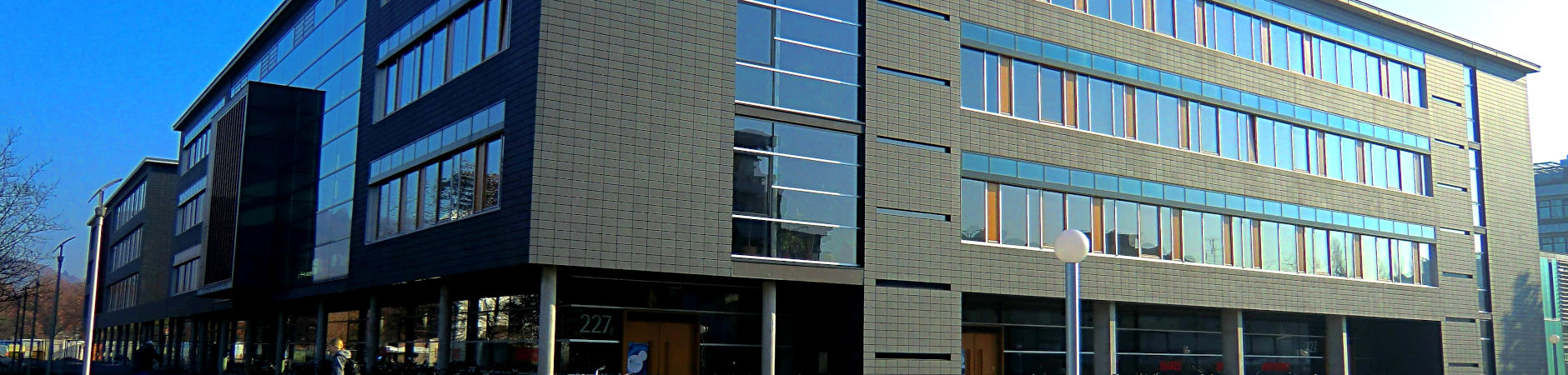
KIP, INF 227, Hörsaal 1
The famous phrase "we are all made of stardust" reflects a profound truth: nearly all visible
matter in the Universe was forged in stellar interiors. Nucleosynthesis proceeds by nuclear
fusion up to iron, beyond which nature relies on neutron capture and β-decay to build heavier
elements.
mehr...23.10.2026 17:00
KIP, INF 227, Hörsaal 1
Festkolloquium anlässlich des 60. Geburtstags von Prof. Dr. Hans-Christian Schultz-Coulon
Particle detectors have been at the heart of experimental particle physics for more than 130
years. Continuous advances in detector technology have enabled one of the great
achievements of modern science: the Standard Model of particle physics, which provides
an extraordinarily successful description of fundamental interactions down to smallest length
scales and forms a cornerstone of our understanding of the evolution of the universe.
mehr...30.10.2026 17:00
Dr. Dylan Nelson, Institute for Theoretical Astrophysics, Center for Astrophysics (ITA/ZAH), Heidelberg University, Germany. KIP, INF 227, Hörsaal 1
It has recently become possible to numerically simulate large, representative volumes of
the Universe. These cosmological (magneto)hydrodynamical simulations solve for the
coupled evolution of gas, dark matter, stars, and supermassive black holes interacting via
the coupled equations of self-gravity and fluid dynamics, all within the context of an
expanding spacetime.
mehr...6.11.2026 17:00
KIP, INF 227, Hörsaal 1
13.11.2026 17:00
KIP, INF 227, Hörsaal 1
Stochastic thermodynamics provides a universal framework for analyzing micro- and
nano-sized non-equilibrium systems. Prominent examples are single molecules,
molecular machines, colloidal particles in time-dependent laser traps and biochemical
networks. Thermodynamic quantities like work, heat and entropy can be identified at the
level of individual fluctuating trajectories. They obey universal relations like the fluctuation
theorem which sharpen the second law of classical thermodynamics.
mehr...20.11.2026 17:00
KIP, INF 227, Hörsaal 1
27.11.2026 17:00
KIP, INF 227, Hörsaal 1
4.12.2026 17:00
KIP, INF 227, Hörsaal 1
11.12.2026 17:00
KIP, INF 227, Hörsaal 1
18.12.2026 17:00
INF 308, Hörsaal 1
Weihnachtskolloquium
15.1.2027 17:00
KIP, INF 227, Hörsaal 1
22.1.2027 17:00
KIP, INF 227, Hörsaal 1
29.1.2027 17:00
KIP, INF 227, Hörsaal 1

 Stochastic thermodynamics: Fundamental limits to precision and efficiency in the micro- and nano-world